Category Archives: Month in Review

February 2026 in Review

In fast-moving current events as I write on March 1, 2026, the United States (executive branch, which is unconstrained in this moment by the other supposedly co-equal branches or public opinion) has launched an unprovoked military attack on Iran, in crystal clear violation of the UN Charter and domestic law. Theoretically, there are mechanisms both international (International Criminal Court) and domestic (impeachment – which can apply to cabinet members, agency heads, and federal judges in addition to the President and Vice President; and court martial which applies to military officers who follow illegal orders) that could eventually hold the criminals involved accountable for their crimes. Lots of people have lots to say and we will see how this unfolds. I am just documenting that I am present at this particularly sad moment in history.

Most frightening and/or depressing story: I hadn’t heard of mirror life, technology we apparently have right now which can destroy all life on Earth. This new, shocking, theoretically existential threat narrowly edged out the usual stream of depressing climate disaster news, the existential threat known to be currently unfolding, but which I suppose I am somewhat desensitized to.

Most hopeful story: Falling consumer prices in China might represent a new industrial revolution analogous to the age of railroads and electricity in the west in the late 1800s, rather than a textbook financial recession which seems to be the (propaganda-tainted?) conventional wisdom. I put this in the win column because if it is true, I am hopeful we will see it spread peacefully to the rest of the world rather than representing a threat.

Most interesting story, that was not particularly frightening or hopeful, or perhaps was a mixture of both: Ray Kurzweil predicts broad consensus that Artificial General Intelligence has arrived by 2029 (defined as AI equal to the leading experts in all fields), “longevity escape velocity” in 2032 (which would reverse the US slipping in recent decades), universal basic income in the U.S. sometime in the 2030s, and the Singularity in 2045 (defined as 1000X human intelligence – always pronounced TIMES according to me), but most importantly and the only thing that truly matters, robots doing my dishes in a couple years.

January 2026 in Review

Well, I seemed to be in a political mood in January. I try to stay on the policy side of the line, but that is hard when bad politics makes good policy impossible. Inspired by a Nate Silver post, I took a look back at what I see as key moments in the last 25 years of U.S. history, and there were just so many that were on a knife edge and ended up going the wrong way, in my view. Maybe there are other universes where things went better, but remember my scientific theory that once they make a Spiderman movie about a scientific theory, it is almost certainly wrong. I find it depressing how we got here, but there is no sense crying over it. We need to learn from the past yes, but then face up to the present moment and start picking up the pieces from where we are.

Most frightening and/or depressing story: Evidence is crystal clear that sabotaging R&D spending is a very effective way to sabotage economic growth and progress. Attaboy to the fools, assholes and traitors currently in nominal charge of the U.S. government. Meanwhile, if a more rational administration ever takes hold, research on learning curves might provide some clues on where to concentrate our efforts for the greatest gains.

Most hopeful story: New York City congestion pricing was a hard-won U.S. transportation policy win in 2025. This is just good, economically sound urban policy that would be apolitical in a more rational world.

Most interesting story, that was not particularly frightening or hopeful, or perhaps was a mixture of both: I reviewed book reviews from 2025, one of which was Ezra Klein’s Abundance (not the 2012 book Abundance by Peter Diamandis, which while I am not a huge fan I continue to be puzzled how Ezra Klein could either not be aware of that book or intentionally choose to name his book the same thing.) I still find it hard to summarize that book in a sound bite, which would need to be done if it were ever going to serve as the basis for a political campaign. But here is an attempt: (1) Continuously review and streamline federal regulations, (2) increase public and private investments in critical technology and infrastructure, including recommitting to clean energy, and (3) address market failures in housing, health care, and education. #3 is a doozy of course, but the un-sexy answer just has to be understand and implement the latest evidence-backed policies. I would think ramp up housing supply, Medicare for All, and free (tax-funded) college or trade school for all. And um, if we want a chance for any domestic agenda to succeed, we also need serious plans to manage international risks including war, ecosystem collapse, famine, and massive refugee flows that may be coming. Now, I just want to acknowledge that there is a rosy future scenario where AI magically solves all these problems. The way that could work is that technological progress and economic growth suddenly pick up so drastically that we are awash in cash and resources to the point that even the wildly suboptimal operations of our dysfunctional political system are adequate to solve the problems. I don’t think it is safe to put all our eggs in that basket! We better assume that we will need to continue doing the hard work of allocating scarce resources to manage difficult problems for the foreseeable future.

December 2025 in Review

2025 is in the books! I covered a number of “best of” posts by others in December so I will highlight a few of those below. I still have some “best of” posts queued up so they will continue to roll out in January.

Most frightening and/or depressing story: Global progress on poverty reduction stalled around 2020. Gains in Asia are offset by losses in Africa. Meanwhile, gains in crop yields may have plateaued and are expected to decline as climate change drives increasingly extreme weather.

Most hopeful story: From Our World in Data, carbon dioxide emissions in the US and most developed countries peaked around 2006 and have been falling. Global internal combustion engine vehicles peaked around 2018, while electric vehicle sales are rising. Renewable electricity generation is growing exponentially as costs of existing technology fall, and there are some promising advances in materials science that could improve wind turbines and batteries. There is hope for fusion power, although it still seems to be the proverbial two decades away.

Most interesting story, that was not particularly frightening or hopeful, or perhaps was a mixture of both: BBC lists 25 most important scientific ideas of the 21st century. Highlights include various genetic technologies (stem cells that don’t come from babies, mRNA vaccines, tissue engineering for human organ transplants), attribution analysis, and of course large language models. Science magazine echoes some of these and adds gene editing, new antibiotics, and progress on heat-resistant rice strains as 2025 breakthroughs.

November 2025 in Review

Most frightening and/or depressing story: Wait, I actually had trouble coming up with a frightening or depressing story this month! It’s not because I was in a particularly good mood. Okay, I’ll go with all the terrible things identified in Project Censored’s yearly roundup of terrible things. These include PFAS, melting ice sheets, police violence, and the generally sorry state of the Native American community.

Most hopeful story: RENEWABLE ENERGY IS NOW CHEAPER THAN FOSSIL FUELS, AND ANYBODY WHO CLAIMS OTHERWISE IS EITHER MISINFORMED OR LYING. Note I said “misinformed”, because I try to be nice and “ignorant” is not a nice word. But they are synonyms. Despite the propaganda coming from the U.S. fossil fuel industry, government, and press, the renewable energy transition is happening and the fossil fuel stranded assets problem (for that industry) is real. Speaking of propaganda, Noam Chomsky is 96, still writing, and surer than ever that people don’t want war and only acquiesce to it because of the propaganda machine.

Most interesting story, that was not particularly frightening or hopeful, or perhaps was a mixture of both: The Tyranny of Small Decisions posits that many small but well-intentioned decisions made at inappropriately low levels within an organization can cause it to stray from its mission.

October 2025 in Review

Most frightening and/or depressing story: The evidence for an increasing worldwide collapse in insect diversity and abundance continues to mount. What’s that you say, you don’t actually like bugs? Well, they are the base of the food chain (after plants) and generally indicators of biodiversity and healthy ecosystems more broadly. That’s right, the proverbial “canary in the coal mine” may have actually been a cockroach. There was also news this month that another “planetary boundary” has been breached. The biodiversity one that would cover insect collapse was already breached a long time ago, and this new one has to do with ocean acidification. Only two more to go for a perfect score of 9/9!

Most hopeful story: The seems to be some mixed evidence, tainted with industry and government propaganda in my opinion, but overall there are some hopeful signs that the global transition to renewable energy is real. It may be too slow and too late to avoid consequences, but it may also avoid the worst possible consequences.

Most interesting story, that was not particularly frightening or hopeful, or perhaps was a mixture of both: I mused about what it was like to be a child in the distant past of novels I have read, during my own youth, for my own children today, and for young adults I have interacted recently. We hear children are “anxious” and experiencing various crises, and I am not denying there is hard evidence of this, but with my own eyes I also see kids being somewhat safer, kinder, and gentler to each other than in the past. I hope it is possible to mitigate some of the negative effects of technology and other negative influences on kids today while also building on the positive trends.

https://www.goodreads.com/book/show/830502.It

September 2025 in Review

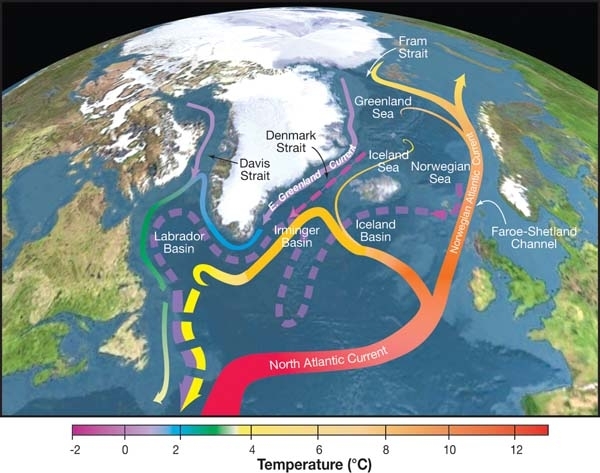
Most frightening and/or depressing story: We are most likely on a path to the AMOC tipping point. I distinguished between the tipping point, which is when collapse becomes inevitable, and the actual collapse itself. These are separated in time, which means the tipping point may only be called in retrospect when it is too late to prevent the collapse. This why being “on the path to the tipping point” is important, because we can still do something.

Most hopeful story: Spain has been so successful at rolling at solar power that the price of solar power has “collapsed”. I’ve been beating a drum lately that economic incentives have tipped in favor of renewable energy worldwide and this fact is being largely hidden from us in the US by propaganda.

Most interesting story, that was not particularly frightening or hopeful, or perhaps was a mixture of both: Brain-machine interfaces have been quietly advancing behind the scenes.

Wikipedia

August 2025 in Review

Good bye summer 2025!

Most frightening and/or depressing story: A gigantic incoming object could be the alien ship that will put us out of our misery. Okay, probably not. The interesting and scary thing is that as our ability to look at the nearby universe improves, we are seeing more surprising stuff. But how are we supposed to think about let alone do anything about a very low probability existential threat like this one? We are not even responding to the “somewhat likely” (nuclear war, pandemics) and “likely happening right now” (a climate tipping point leading to future collapse) existential threats in front of us. I suggested that the tipping point will be called in retrospect, and 2025 might be a nice round number for the history books.

Most hopeful story: No matter what impression we are being given in the U.S., economic forces continue to push towards renewable energy and electrification worldwide.

Most interesting story, that was not particularly frightening or hopeful, or perhaps was a mixture of both: Designer babies are here, and the trend towards the rich and powerful accelerating their own evolution (and a few governments making this available to the masses) can only accelerate.

July 2025 in Review

Most frightening and/or depressing story: In case we still don’t have enough feedback loops to worry about, loss of Antarctic ice could also trigger volcanoes under Antarctica.

Most hopeful story: The Great Lakes states, provinces, and cities may be the best climate havens North America has to offer.

Most interesting story, that was not particularly frightening or hopeful, or perhaps was a mixture of both: Policies to increase housing supply in the most economically dynamic cities can theoretically accelerate economic growth, since housing supply is not expanding fast enough and is therefore holding economic growth back. A lot of discussion has been focused around zoning, which is a local matter. But I offered some additional suggestions: investment in better transportation and communication infrastructure to reduce the friction of working across distances between homes and offices, effectively enlarging housing markets. And serious investments in construction productivity, which has been flat in the U.S. for decades. Ideas include more factory-based modular components. The U.S. has tried and failed at this before, but of course China is now leading the way. AI should also be pretty good at construction scheduling and logistics. The U.S. is somewhat successfully partnering with Korean ship-building expertise, at least on a small scale.

Mount Ngauruhoe, New Zealand, aka Mount Doom from Lord of the Rings (Guillaume Piolle)

June 2025 in Review

I have a perfect storm of work, school, and family related urgent priorities converging at the moment, so I haven’t been posting as much as usual and might not for a few weeks.

Most frightening and/or depressing story: The science on how bad a nuclear winter would actually be gets updated from time to time. It never gets any better!

Most hopeful story: This is the best I can do – Biden wasn’t able to take political credit for his infrastructure and energy transition accomplishments because his accomplishment was getting money appropriated for them, whereas implementation of these will be painfully hard and painfully slow. (Yes, I believe based on evidence and logic that investments in infrastructure and energy production that do not destroy the biosphere are good ideas.) But at least part of this agenda will be implemented over time, and Trump is spending substantial energy of his own only partially rolling back these programs.

Most interesting story, that was not particularly frightening or hopeful, or perhaps was a mixture of both: A Minimal Quality of Life index has been developed which is intended to better capture the cost of living real working families and parents are experiencing.

May 2025 in Review

Most frightening and/or depressing story: The India-Pakistan conflict seems to have died down a bit (or did the media outlets I pay attention to just lose interest?). But both the potential nuclear conflict and the long-term loss of glacial ice billions of people depend on are terrifying.

Most hopeful story: I came up with four keys to my personal happiness in the moment: sleep, coffee, exercise, and down time. What, no family, community, career accomplishment, or making a lasting difference in the world you ask? No, those are about reflecting on life satisfaction, not being in the moment. No “fun”? Well, my idea of fun may be different than your idea of fun. I wish you joy and happiness as you pursue your idea of fun, only try to have some empathy and don’t force your own idea of fun on others. So there.

Most interesting story, that was not particularly frightening or hopeful, or perhaps was a mixture of both: The U.S. approach to R&D is a partnership between government (through both grants and procurement power), universities, and the private sector (historically, including regulated monopolies like Bell Labs). Other countries including China have copied this model somewhat successfully, and our own government taking a monkey wrench to our own system that has worked so well seems like a really stupid idea. First we need to stop the damage and then let’s hope it can be repaired.