Tag Archives: propaganda

a deep dive on electric vehicle sales

The International Energy Agency has a deep dive on global electric vehicle sales. Sales everywhere have accelerated sharply over the last five years. Of the countries covered, only Norway has gotten close to 100% of all new sales. Other countries that are over 50% are Nepal, Iceland, China, and Singapore. Sales are particularly lagging in the U.S. and Canada. The IEA article has a visualization, but I also like one from Rest of the World based on the IEA data. (I was not able to embed either of them.)

Government subsidies are part of the reason for these trends, but the economics is also starting to favor electric vehicles in many places, even just looking at purchase price which is what consumers are largely going to respond to. But the availability of mass-produced low-cost Chinese models is also a big part of the story, particularly in Southeast Asia and in China itself.

I have a few thoughts. First, it’s not a story of subsidies skewing the benefit-cost picture towards electric vehicles when it would not otherwise be. The positive benefit-cost ratio is there, and government policy is helping many countries achieve commercialization and scale faster than they otherwise would, although the shift is inevitable even in the U.S. Second, U.S. subsidies TOWARDS liquid fossil fuels, along with lack of infrastructure investment, ARE skewing the positive benefit-cost ratio to negative for our already cash-strapped consumers, while propaganda hoodwinks us into thinking the rest of the world doesn’t have nice things being denied to us. Third, with the economics clearly favoring electric vehicles over the life cycle, corporate and state/local government fleets will be able to do the math and make the right choice, and this will eventually start to move the market. The federal government will follow suit eventually when political winds shift. And fourth, even if the benefit-cost ratio were not positive, the insane Iran invasion would be incentivizing China and Southeast Asia to shift toward electric and away from liquid fossil fuels from the Middle East, to help manage geopolitical risk. So in this sense U.S. policy may have moved the needle significantly towards electric for 2 billion or so consumers abroad, even while our 350 odd million at home are being successfully hoodwinked. Some of the energy to fuel these vehicles will shift from oil to coal in the near to medium term, which is not ideal, but it still represents an increase in efficiency (I think) and the economics will continue to shift toward renewables (and nuclear?) over time.

By the way, I had to refresh for myself: The IEA is an OECD institution, while the IAEA is a UN institution. Neither should be confused with the EIA, which is a U.S. government agency. My fingers really want to type IAE for some reason, and apparently I am not alone, but that is not a real agency.

what to eat, or you can take my cheese…WHEN YOU PRY IT FROM MY COLD DEAD HANDS!

Harvard School of Public Health explains how the new U.S. government nutrition guidelines were developed without proper scientific oversight. The normal process is a transparent one where an expert panel reviews the latest evidence and submits a report with recommendations, supposedly without any bias or industry influence. (A cynic could probably look at these highly credentialed experts at leading universities and show that they receive research funding from industry and from government agencies being heavily lobbied by industry, because where else would they receive funding from? But they can at least channel any propaganda through some scientific and ethical guardrails you would hope.) USDA employees aren’t obligated to follow these recommendations to the letter, but they at least give them some weight and balance them against the economic and political factors. This time the panel submitted their report as usual, but USDA then cherry-picked a separate set of experts to produce a “supplemental report” without the transparency or adequate documentation. And the guidelines are then based on that. So they are not credible.

Even though the process was not credible, the consensus seems to be that the new guidelines are not really all that different. The main issues have to do with how they are being (badly) communicated, including an apparent emphasis on more saturated fat (which is not really what the technical guidelines say at all, but the concern is that very few people will drill into the technical guidelines). If I can try to clarify the saturated fat issue, it seems to be that a portion of the population that has no cholesterol issues may be able to increase saturated fat intake with no ill effects, but a portion of the population that has cholesterol issues will have more heart attacks and strokes and early death if they do so. Nutrition advice really should be more personal in an ideal world, but with public health guidelines, broad, simple, clear statements that benefit a majority of the public on balance seem to be the way to go. And replacing saturated fat with healthier plant-based fats and oils definitely seems to fall in this category. If people who are eating a lot of sugar and processed garbage were to replace it with meat, that might actually benefit them which may be what the guidelines are trying to say. Of course, they should be replacing it with fruits, vegetables, beans, nuts, seeds, whole grains, healthy fats and proteins. And I want to state that I support vegetarians and vegetarianism on ethical and environmental grounds. These considerations are missing entirely from the government’s concept of “nutrition”, and they should not be.

Another criticism I have always had of these guidelines is the use of weight, like eat so many grams of fat per day, or fat should be X% of your calories. Even those of us who might consider ourselves reasonably quantitative and logical think in volume or area, not weight. If you told me to aim for X tbsp of vegetable oil per day or Y slices of cheese, I could do that. Tell me Z grams or ounces, and I have no idea what to do, and then I am supposed to convert that to energy units (calories) and determine what percentage it is of my total calories for the day. But people don’t pay much attention to these guidelines anyway. They need to be getting this information from “trusted messengers” like teachers and doctors, and if these messengers had simple clear messages from the government that they themselves understood and trusted, they could just pass them along. Something like a point system that approximates the weights and calories involved could work.

I don’t think these guidelines have much short-term impact just because us laypeople don’t pay attention, and the professionals that could help us eat better don’t get clear communication materials out of these guidelines that they can work with.

But the longer-term damage here is the damage to the credibility of government health and medical advice. When I tell my kids “not to believe everything you hear and read on the internet”, I tell them to be aware of the source of the information. And one source I would have considered credible in the past is a major federal agency like USDA, CDC, etc. If major government, academic, and professional journalistic sources are telling you the same thing and it matches what that social media influencer or your friend are telling you, it’s still not 100% guaranteed to be true but you can start to have some confidence. But the credibility of federal agencies has really been significantly damaged by this administration and it may take a long time to recover, even if the past norms are ever put back into place.

October 2025 in Review

Most frightening and/or depressing story: The evidence for an increasing worldwide collapse in insect diversity and abundance continues to mount. What’s that you say, you don’t actually like bugs? Well, they are the base of the food chain (after plants) and generally indicators of biodiversity and healthy ecosystems more broadly. That’s right, the proverbial “canary in the coal mine” may have actually been a cockroach. There was also news this month that another “planetary boundary” has been breached. The biodiversity one that would cover insect collapse was already breached a long time ago, and this new one has to do with ocean acidification. Only two more to go for a perfect score of 9/9!

Most hopeful story: The seems to be some mixed evidence, tainted with industry and government propaganda in my opinion, but overall there are some hopeful signs that the global transition to renewable energy is real. It may be too slow and too late to avoid consequences, but it may also avoid the worst possible consequences.

Most interesting story, that was not particularly frightening or hopeful, or perhaps was a mixture of both: I mused about what it was like to be a child in the distant past of novels I have read, during my own youth, for my own children today, and for young adults I have interacted recently. We hear children are “anxious” and experiencing various crises, and I am not denying there is hard evidence of this, but with my own eyes I also see kids being somewhat safer, kinder, and gentler to each other than in the past. I hope it is possible to mitigate some of the negative effects of technology and other negative influences on kids today while also building on the positive trends.

https://www.goodreads.com/book/show/830502.It

Noam Chomsky is old!!!

In my last post I posited that 61 is not that old, because it is not that much older than I am right now. Well, Noam Chomsky is 96, and that sounds old to me! How will I feel about that when I am, say, 89, if I am fortunate enough to make it that far? Congratulations to Noam for being alive and kicking and, not only that, WRITING BOOKS!

Anyway, he has a new (ish, to me) book from 2024, and here is a brief excerpt posted in a blog called neuburger.substack.com.

Elites gonna elite, aka manufacture consent. We have enough knowledge, technology, and wealth on this planet to all live in relative peace and comfort right now if we could only get out of our own way. But perhaps it is “utopian” to think that our species of nearly hairless poop-slinging monkeys will ever be able to do that on any scale for any length of time.

Btw, the book is The Myth of American Idealism: How U.S. Foreign Policy Endangers the World.

Wikipedia

September 2025 in Review

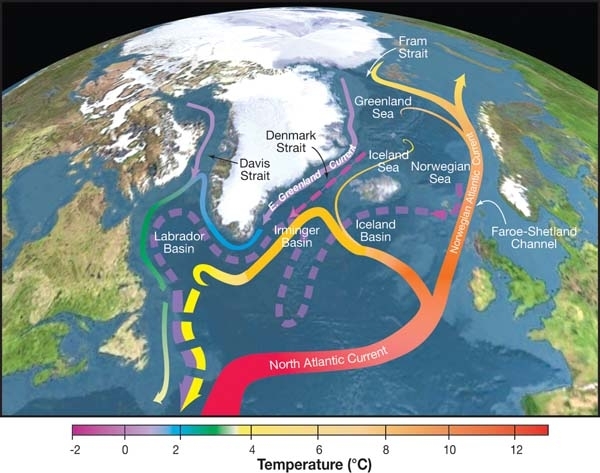
Most frightening and/or depressing story: We are most likely on a path to the AMOC tipping point. I distinguished between the tipping point, which is when collapse becomes inevitable, and the actual collapse itself. These are separated in time, which means the tipping point may only be called in retrospect when it is too late to prevent the collapse. This why being “on the path to the tipping point” is important, because we can still do something.

Most hopeful story: Spain has been so successful at rolling at solar power that the price of solar power has “collapsed”. I’ve been beating a drum lately that economic incentives have tipped in favor of renewable energy worldwide and this fact is being largely hidden from us in the US by propaganda.

Most interesting story, that was not particularly frightening or hopeful, or perhaps was a mixture of both: Brain-machine interfaces have been quietly advancing behind the scenes.

Wikipedia

Reporters without Borders Press Freedom Index 2024

Reporters without Borders issues an annual Press Freedom Index. The United States ranks only 55 out of 180 countries in the index, so not quite in the top quartile. The top countries are mostly in Scandinavia and Northern Europe, while Eastern European nations, relatively benevolent island dictatorships, and some African countries make up a second tier coming in just ahead of the United States. They cite the dominance of the profit motive in U.S. journalism, the rise of openly partisan media outlets, and harassment, intimidation and assault of journalists both online and in real life.

Interestingly to me, they don’t mention the somewhat obvious manipulation of newsrooms by government and intelligence agencies. Maybe this goes hand in hand with the profit motive issue, when parroting press releases or relying on obvious plants is the most cost-effective way to churn out news. Consent doesn’t even have to be manufactured, it just happens by default.

Project Censored Top 25

You should buy Project Censored’s new book or otherwise support them if you can. And having said that, they appear to have posted their top 25 “most censored” stories of 2023 on RSS. Here are a few that caught my eye:

  • #22: Agricultural industry’s continued heavy use of antibiotics linked antibiotic resistance concerns in humans
  • #21: A lot of homeless people actually do some sort of paid work.
  • #19: One study estimated economic costs of gun violence in the U.S. at $557 billion per year. It may seem callous to “put a price on human life” this way, but hard nosed cost-benefit analysis can sometimes help justify better policy decisions, as it has for seat belts and air pollution controls, for example.
  • #16: Sixteen municipalities in Puerto Rico are suing fossil fuel giants under racketeering statutes for intentionally misleading the public about the causes of climate change. And #14: And it’s not just oil and gas companies – the electric industry was also very much in on the lies and cover ups that have altered our biosphere beyond the point of return over the past half century.
  • #15: In the U.S., data show black people are wrongfully convicted of murder about seven times more often than white people.
  • #5: The idea of buying carbon offsets to offset travel or other emissions-producing activities seems very attractive, but unfortunately, the objective evidence does not show them to be anywhere near as effective as advertised.

propaganda and the media’s Israel-Palestine coverage

This FAIR article lists some propaganda techniques it says the media uses to bias Israel-Palestine coverage. I am not taking a political stand here on the basis of my limited knowledge of these issues, but rather taking note of the propaganda techniques themselves. It is a useful skill in today’s world to be able to spot propaganda. The bold-faced headers are my paraphrasing of what the article presents, while the remaining text is my own analysis.

  1. Disproportionately presenting position statements made by one side or the other, or interviewing individuals representing one side or the other. Corporations and governments are well aware that “press releases” become pre-packaged news for the cash strapped and possibly lazy media to use with minimal effort. So the better organized side with deeper pockets is going to get more coverage. Sure there are journalistic ethics, but economics is the stronger force, so it becomes an arms race where everybody hires “communications” specialists and competes to get their version of a story out. The news coverage then goes to the highest bidder.
  2. Using words that do not assign blame for violence, such as “clash” rather than “assault”. We see examples in the local U.S. media too, where street violence is caused by “criminals” or “gangs” but vehicular homicide, negligent road design, and non-enforcement of traffic safety laws are portrayed as “accidents”.
  3. Excessive use of the passive voice. “People were killed” used more often when talking about violence affecting one side or the other.
  4. Covering deaths on one side much more than the other, or not covering deaths on one side at all. We certainly see this with U.S. coverage of our foreign wars and local violence. I think there is also just a sensationalist aspect to this where unfamiliar acts of violence (a horrific suburban school shooting) are covered disproportionately to all the other acts of violence around us (again, deaths in and around motor vehicles possibly being the most glaring.) I think the media could combat this somewhat by giving more facts and figures on death and violence to give context to the more sensational, anecdotal stories. And a lot of this could be automated pretty easily. For example, if the media is covering the latest incident involving an autonomous vehicle, AI could very easily put national crime, violence, and transportation safety data stats at their fingertips. This is routinely done in the sports world (this is the 18th time such and such a combination of random events has happened on a Thursday in June is 1976…).
  5. “Sidelining international law”. In the case of Israel, there is somewhat of an international consensus that some of the government’s actions are illegal. Palestine is also recognized as a state by quite a few UN member states. We don’t hear much about this in the U.S. media. Again, it is not hard to have facts and figures provided by international non-governmental agencies handy. Although, in the U.S. we have propaganda causing us to discount information coming from the UN.
  6. “Reversing victim and victimizer”. This has to do at least partially with how “protests”, “demonstrations”, “looting”, and “riots” are covered. In the U.S., one example of this was the Hurricane Katrina coverage, although I think the media coverage of the 2020 George Floyd protests was a bit more even-handed. There is a certain element of media and corporate self-licking ice cream cone on this though, where they all stand around in a circle patting each other’s backs while continuing to rig elections for the rich and powerful and not deliver concrete benefits and services to the working people of this country.

March 19, 2003

As I write this on March 19, 2023, today is the 20-year anniversary of the U.S. launching its attack on Iraq. This article in the Intercept reminded me of something I had forgotten – that in addition to the supposed weapons of mass destruction, which the administration probably knew was doubtful, part of the narrative to build support was the narrative that Saddam was involved in the 9/11 attacks. This article tells a story where the CIA looked and looked for connections between Iraq and Al Qaeda, and was never able to prove anything despite the administration pushing the theory in public. Only when it finally and embarrasingly became clear that the evidence could not support case did the administration throw its full weight behind the “missing weapons of mass destruction” theory.

Tenet was so intimidated by the fallout from the fight over the intelligence on connections between Iraq and Al Qaeda that he was eager to cooperate with the White House on WMD. After all, there were plenty of old intelligence reports, dating back to the 1990s when United Nations weapons inspectors had been in Iraq, that strongly suggested Saddam had WMD. There was even a sense of guilt that still ran through the CIA over the fact that, at the time of the Gulf War in 1991, the agency had failed to detect evidence of Iraq’s fledgling nuclear weapons program. That the CIA had almost no new intelligence on Iraq’s weapons programs since at least 1998, when U.N. weapons inspectors had been withdrawn from Iraq, was largely ignored by Tenet and most senior CIA officials; they didn’t want to admit that they had been dependent on the U.N. To account for a gap of at least five years in much of the intelligence reporting on Iraqi WMD programs, the CIA assumed the worst: that the weapons programs detected in the 1990s had only grown stronger and more dangerous.

Whenever intelligence was collected that countered this narrative, CIA officials discredited the sources or simply ignored it…

By contrast, any new nugget of information suggesting that Iraq still had WMD was treated like gold dust inside the CIA. Ambitious analysts quickly learned that the fastest way to get ahead was to write reports proving the existence of Iraqi WMD programs. Their reports would be quickly given to Tenet, who would loudly praise the reporting and then rush it to the White House — which would then leak it to the press. The result was a constant stream of stories about aluminum tubes, mobile bioweapons laboratories, and nerve gas produced and shared with terrorists.

Intercept

So maybe some people pushing the narrative understood that it was a lie, but many, it seems, fooled themselves with their own bullshit. They started a war that broke hopes for a peaceful world emerging from the Cold War.

January 2023 in Review

We’re now 1/12th of the way through 2023. Is this really the fabulous science fiction future we were promised? Well, at least the Earth is not a smoking ruin, at least most parts of it.

Most frightening and/or depressing story: How about a roundup of awful things, like the corrupt illegitimate U.S. Supreme Court, ongoing grisly wars, the CIA killed JFK after all (?), nuclear proliferation, ethnic cleansing, mass incarceration, Guantanamo Bay, and all talk no walk on climate change? And let’s hope there is a special circle of hell waiting for propaganda artists who worked for Exxon.

Most hopeful story: Bill Gates says a gene therapy-based cure for HIV could be 10-15 years away.

Most interesting story, that was not particularly frightening or hopeful, or perhaps was a mixture of both: Genetically engineered beating pig hearts have been sown into dead human bodies. More than once.