This new mutual defense pact between Saudi Arabia and Pakistan seems like a huge deal to me. My take is that after the Israeli attack on Qatar, Saudi Arabia has decided it can’t rely on the US nuclear umbrella to cover it. So they are formalizing a relationship whereby they bankroll Pakistan (and probably its shadowy security services with ties to the Taliban and Al Qaeda, and other terrorist groups) in exchange for a nuclear arsenal with their names on it. It seems likely to me that other Gulf countries that often move in lockstep with Saudi Arabia (UAE, Bahrain, Oman) might join this alliance. I don’t know about Qatar itself, after Saudi Arabia was threatening them militarily just a couple years ago. And they have never ramped up military spending while welcoming in the US military. No matter how you look at it, it is a loss for control of nuclear proliferation and US influence in the region. It very well may have the deterrent effect on Israel that these countries are looking for, but it seems to drag a whole range of large countries into a mesh of confusing and entangled alliances, including the US, India, and China.
7 of 9 planetary boundaries breached
The Planetary Health Check 2025 updates the status of Johan Rockstrom’s “planetary boundaries” using new data. I’ve pointed out that the indicators chosen are a sort of muddle of stocks and flows from a systems perspective, but nonetheless I think it is a good attempt at scientific communication. It distills complex underlying data into a set of indicators ordinary busy/distracted (I try to avoid words like “ignorant”, but the result is the same whether we can’t or won’t educate our selves) people can understand. I still like the “ecological footprint” concept personally because it is a single system-based metric, and you can drill down a level into its individual components if you want to. Nonetheless, it seems to be out of fashion and replaced by this. Anyway, 6 of 10 planetary boundaries were already previously outside the “safe space”, and this time ocean acidification is added to the list. Only ozone and stratospheric aerosol loading are in the safe space, and paradoxically the latter exacerbates global warming somewhat. There is some nuance, with indicators like nitrogen pollution and biodiversity loss in the “high risk zone” and others like land use and carbon dioxide in the increasing risk zone and headed in the wrong direction.
if a tree falls in the woods, and a microphone picks it up and is reviewed by an AI, who emails a human but the human doesn’t check their email, did it make a sound?
I’ve read the first couple chapters of This is Your Brain on Music: The Science of a Human Obsession. I don’t know if I’ll finish it, because I don’t seem to be in the mood for long non-fiction books at the moment. But there are some really interesting things. First, there is a definitive answer to the “if a tree falls in the woods…” question. The tree causes air and soil molecules to vibrate for sure. But for that to qualify as “sound”, it has to be detected by ears and transmitted to a brain, where it becomes sound. Squirrel ears can qualify, so the brain doesn’t happen to be human. In fact, scientists have put electrodes in animal brains and confirmed that they react to sound exactly as our brains do. So it’s interesting me to that we are born wired to understand music at a neural level – this is an instinct actually much more fundamental than language.
There’s some more interesting stuff. The reason a violin sounds different from a flute or a human voice has mostly to do with overtones – a note is not just a single pitch but many mathematically related pitches where the strength varies between pitches. (Some people say the violin is the most beautiful instrument because it is most like the human voice. I say this is an insult to violins.) There is also the “attack”, which is the percussive noise made when sound first starts on a given instrument, which is chaotic for a short period of time before stabilizing. Then there is reverberation or echo of the space the instrument happens to be in (as I was musing about pipe organs recently, you could think of the space as part of the instrument since it is so fundamental to the sound). Pipe organs are particularly interesting because they give the organist control over which overtones are sounded at various strengths. Digital synthesizers are intended to do exactly this, but I think anyone with well-functioning ears can still detect the difference between a synthetic sound and one produced by physical instruments. Then again, as most of the music we hear these days is recorded and played back, we are probably losing a lot of nuance of what the instruments sound like at the same time the synthesizing technology is continuing to improve.
Charlie Stross on renewable energy
I always enjoy Charlie Stross‘s take on things. He’s a fiction writer, sure, but he seems to have his finger on the pulse of politics and technology, and from an international perspective. He says he is writing more escape fiction now because his past near-future dystopian writings have come true, and that is too depressing to write any more. I still love the Laundry Files and Merchant Princes series though. Anyway, his ideas below are consistent with some recent thoughts I’ve expressed that market incentives have actually shifted to favor renewable energy and electrification, but in the U.S. at least a massive onslaught of oil and gas industry propaganda is successfully keeping us from realizing what we are missing…
Renewables have definitively won: last year it became cheaper to buy and add new photovoltaic panels to the grid in India than it was to mine coal from existing mines to burn in existing power stations. China, with its pivot to electric vehicles, is decarbonizing fast enough to have already passed its net zero goals for 2030: we have probably already passed peak demand for oil. PV panels are not only dirt cheap by the recent standards of 2015: they’re still getting cheaper and they can be rolled out everywhere…
The oil and coal industries have tens of trillions of dollars of assets stranded underground, in the shape of fossil fuel deposits that are slightly too expensive to exploit commercially at this time. The historic bet was that these assets could be dug up and burned later, given that demand appeared to be a permanent feature of our industrial landscape. But demand is now falling, and sooner or late their owners are going to have to write off those assets because they’ve been overtaken by renewables.
Politics and propaganda can’t buck economic forces forever (because economic forces are ultimately, eventually constrained by our real physical universe). The question is how long these trends can take to play out. Charlie says he doesn’t expect to see it, and this is sad to me. I am one decade younger, and that makes my odds only a little bit better. Unlike Charlie, I am not an extremely talented writer making a gift of the contents of my brain to the entire world. Lately it has been making me sad when I learn that the author of a book or series I have enjoyed is dead. I find myself looking up what age they died and what they died from, and wondering what is going to come for me and when. Sad, I know. Such is the existential dread of late middle age.
how to be a traitor to the United States of America
I happen to like my country, but I would like to offer some suggestions on policy options for the aspiring traitor:
- Remove funding for basic scientific research other than in weapons. This investment will take a while to pay off, but long term it will remove the basis for economic growth as an advanced economy, until one day we can no longer be an advanced economy.
- Make sure only the rich can afford adequate child care. This will ensure that single parents and adults in single-income households (usually mothers) will not be able to work or study. This removes a good chunk of the potential work force, and makes sure those women will not gain new skills or knowledge that might allow them to contribute to our economy. You can also remove access to birth control to help reinforce this cycle, and you have also retarded any progress on new or better birth control technology.
- Undermine education at all levels. This is also a slow burner because it will take a generation for today’s toddlers to become tomorrow’s ignorant incompetent adults (he who knows not and knows not he knows not, he is a child, be careful not to teach him anything). There are some immediate things you can do though. A big one is stop issuing visas for full-pay international students. This immediately subtracts hard currency from the nation’s economy, and also has an additional payoff tomorrow of making sure they can’t stay in the country and add value to the economy.
- Identify industries where the United States has a comparative advantage, and sabotage them. Also reduce the pool of skilled workers they have access to. If you’re lucky, they will throw up their hands and leave the country for a techno-libertarian island dystopia.
- Invest heavily in industries with no comparative advantage for an advanced economy. Textiles and footwear come to mind. But then you can also undermine free trade in general so that nobody will be interested in buying inferior, high-cost products anyway. By undermining research and development, you have also made sure that potential high-value-added industries like robotics and autonomous electric vehicles can never keep up with higher-tech, more productive foreign economies.
- Let the transportation, water, electric, and food infrastructure decay. You don’t have to actually do anything here. Just don’t talk about it and nobody will know or care or do anything.
- Here’s where it gets wonky, but you want to put incompetent people in charge of monetary policy and generally all things to do with money and finance. Do this, then get out of the way while the financial industry captures and manipulates your idiots to its short-term advantage while creating an unstable house of cards that will come crashing down in the not-too-distant future. Crypto-currency is not the core of this strategy but just a little extra grease on the wheels of chaos.
- Undermine the nation’s ability to prepare for, respond, and recover from natural disasters, such as fires, coastal and inland flooding, hurricanes and other severe storms, and earthquakes. There’s a certain element of chance here. You could get a major volcanic eruption if you are lucky, but you can’t control that. Drought and generally poor water management are some of those slow-burn policies that could take a long time to pay off, but climate change is on your side here. As they say, the end of civilization as we know it is two meals away.
- This is somewhat of a tricky play, but through a combination of foreign aid removal, lack of action on climate change, and poor diplomacy with nearby countries, you can ramp up flows of desperate migrants. This gives local people somebody to blame for all their problems other than your policies.
- Apply propaganda judiciously to make sure Americans don’t know Chinese factories are building autonomous vehicles for $10,000 and investing in ultra-modern high speed rail and automated ports. Also use anti-tax, anti-immigrant, anti-city, and anti-poor people propaganda (the last two go together pretty well) so that nobody will be willing to fund the government or expect it to do anything.
You might be surprised that I have left certain seemingly obvious policies off this list. But I actually would not send an angry mob to attack the legislative building or set it on fire. It’s better to have the empty symbols of democracy sitting there for people to look at. I would not cancel elections, but rather limit the choices to a few very bad ones. I would not blatantly limit speech but rather do the opposite, encouraging a huge amount of meaningless talky-talk so that everyone’s jaws are flapping at the same time and there is no way anyone can be listening let alone thinking.
Good luck, modern day Benedict Arnold, in your quest. And may God Bless the United States of America.
bacteriophages
This article is about “AI designed viruses”, but what seems more important to me is progress on the idea of genetically engineered bacteriophages, or viruses that can infect and potentially kill bacteria. Antibiotics seem to have entered a state of diminishing returns (i.e., technological progress is falling short of evolution in some really scary bacteria). Bacteriophages seem promising as the next phase, where you can inject someone with a virus that will infect the specific bacterium causing a problem while not damaging any other healthy cells or beneficial bacteria.
September 2025 in Review
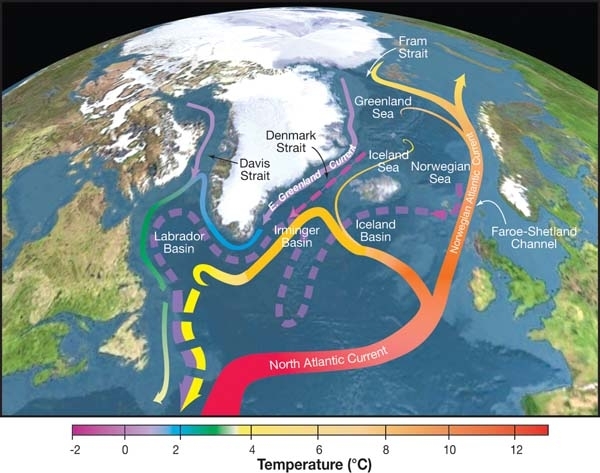
Most frightening and/or depressing story: We are most likely on a path to the AMOC tipping point. I distinguished between the tipping point, which is when collapse becomes inevitable, and the actual collapse itself. These are separated in time, which means the tipping point may only be called in retrospect when it is too late to prevent the collapse. This why being “on the path to the tipping point” is important, because we can still do something.
Most hopeful story: Spain has been so successful at rolling at solar power that the price of solar power has “collapsed”. I’ve been beating a drum lately that economic incentives have tipped in favor of renewable energy worldwide and this fact is being largely hidden from us in the US by propaganda.
Most interesting story, that was not particularly frightening or hopeful, or perhaps was a mixture of both: Brain-machine interfaces have been quietly advancing behind the scenes.
fossil fuel demand scenarios
This Bloomberg article called “The Myth of Peak Fossil-Fuel Demand Is Crumbling” looks like a good example of a journalist writing a fair and balanced data-driven article, and an editor then giving it an idiotic headline. So let’s ignore the headline. The article summarizes the International Energy Agency’s World Energy Outlook. I couldn’t find the 2025 edition online, so Bloomberg must have an advance copy.
Anyway, I found the scenarios interesting. They have a Current Policy Scenario, which assumes countries will continue their current policies (behaviors? these aren’t the exact same thing are they?) indefinitely into the future, a Stated Policies Scenario, which includes “policy proposals”, and an Announced Pledges Scenario which includes “political aspirations”. Under “Current Policies”, fossil fuel demand continues to rise through 2050, while in the other two it turns a corner right about now. I’m not sure I buy the graph though, because it shows a notable acceleration over the past few years, then a sharp corner today where a decline begins. That is generally not how trends work, unless we are expecting some catastrophic external event to happen today. Let’s hope not.
Am I hopeful? Not really, because this is only saying that the trend of too high emissions may get more too high or less too high over the next couple of decades. It is too high, and this is pushing our world toward or possibly already past a point of no return which we will never be able to fully recover from. Regardless, it is never too late to make things less bad than they could have been if no action was taken. The fact that our past actions have closed off some good outcomes forever is not an excuse not to take action that can avoid some really bad outcomes.
The real question to me is whether economic forces are pushing policy in the right direction, because if they are, politics can’t buck economics forever. So the most hopeful thing I can say is that economics may be creating some headwinds for bad policy. Trying to go full bore on renewables like parts of Europe have may be overreach in terms of near-term policy, but being ready to make a push on electrifying the transportation system when political winds shift may be a practical strategy. Let’s have those policies ready.
biodiversity decline
Out of many doom and gloom topics, biodiversity decline may be the gloomiest, or at least the gloomiest that the global political system and public by and large are not thinking about. With climate change, at least we all know something is going on even if we are bickering about it and not doing enough 50 years after we needed to start acting in a concerted way. Anyway, global insect decline is just beyond shocking. Here is just one article hot off the presses:
Long-term decline in montane insects under warming summers
Widespread declines in the abundance of insects portend ill-fated futures for their host ecosystems, all of which require their services to function. For many such reports, human activities have directly altered the land or water of these ecosystems, raising questions about how insects in less impacted environments are faring. I quantified the abundance of flying insects during 15 seasons spanning 2004–2024 on a relatively unscathed, subalpine meadow in Colorado, where weather data have been recorded for 38 years. I discovered that insect abundance declined an average of 6.6% annually, yielding a 72.4% decline over this 20-year period. According to model selection following information theoretic analysis of 59 combinations of weather-related factors, a seasonal increase in insect abundance changed to a seasonal decline as the previous summer’s temperatures increased. This resulted in a long-term decline associated with increasing summer temperatures, particularly daily lows, which have increased 0.8°C per decade. However, other factors, such as ecological succession and atmospheric elevation in nitrogen and carbon, are also plausible drivers. In a relatively pristine ecosystem, insects are declining precipitously, auguring poorly for this and other such ecosystems that depend on insects in food webs and for pollination, pest control, and nutrient cycling.
For a more general overview of the insect decline issue, I suggest this paper: Insect decline in the Anthropocene: Death by a thousand cuts.
There is some debate about which causes are more important than others, but like climate change, the causes are pretty much known (and one of them is climate change). Destruction of natural ecosystems to clear land for urban areas and agriculture is the biggest and most obvious. Massive use of pesticides and other agricultural chemicals. Heat and drought. The spread of invasive species.
The destruction of nature is just sad for everyone who values nature for its own sake. For those who don’t, it’s a little harder to come up with the elevator pitch for why this matters. Pollination has huge and obvious economic value, but maybe we can replace natural pollinators with domesticated bees for the most critical crops.
Beyond pollination, insects are the base of the food chain. Their disappearance is actually a symptom of loss of plant life, since many of them are herbivores and depend on plants. We should be able to help a little bit just by conserving or replanting some of the native trees and other plants we know they depend on in our urban areas and on farms. A guy I know wrote a paper about this.
Insects, in their function as herbivores, are also critical in transferring energy, biomass (i.e. carbon), and nutrients up the food chain to everything from birds to amphibians to fish. So their loss is a direct cause of the loss of a lot of these other animals. But in terms of the food supply, we can probably produce chickens and pigs and cows without them I suppose. So it’s a little hard to tell that “conservative” uncle at the Thanksgiving table that there is some imminent tipping point where the bugs dwindle to a certain level and then we all starve to death. (“Conservative” is in quotes because a true conservative would be interested in, well, conserving things not destroying them.)
“fastest growing suburbs” vs. climate havens
A research group at University of Illinois makes population projections for US cities (suburbs? municipalities? this is a little unclear from the article) through 2100, and the top 40 hits are in the metro areas outside Phoenix, Dallas, Houston, Austin, Oklahoma City, Miami, Tampa, Orlando, Riverside (greater greater Los Angeles), Salt Lake City, Las Vegas, Denver, Boise, Fargo. These would seem to be heat, drought, flood, and fire prone areas, so this does not square with the idea that disaster-driven insurance rate increases will force mass population movements out of these areas.
Part of the answer to the insurance paradox is that political pressure causes states to set up “high risk pools” initially intended to assist small numbers of highly vulnerable homeowners, and the scope of these tends to creep up over time. This has particularly happened in Florida, although Florida has taken steps to move people out of their program recently. Another piece of the puzzle is that a big factor in private insurance rates is not disasters but credit scores, and this “mutes the market signals”. I tend to think that insurance companies, evil or at least amoral as they are, know what they are doing in terms of the math, and credit scores must be highly correlated with claims and losses. They also probably have no reason to take a long term view because they can drop policies any time they want as conditions worsen. Mortgage companies might have something to say about this, but remember that they are implicitly government subsidized for the most part.